A continuation of a series about ancient travels.
This is the story of a group of Phoenician sailors who undertook a journey that was extraordinary for its time. Even though we do not know the names of any of the individual sailors involved, I thought that a journey like this should not be skipped in this series.
Herodotus
Herodotus, the ancient Greek historian, lived in the fifth century BC and produced a work called “The Histories“. He was called “The Father of History” by Cicero, but was called “The Father of Lies” by Voltaire. This points up two facts: Herodotus was the first historian known to collect his materials systematically, test their accuracy to a certain extent, and arrange them in a well-constructed and vivid narrative; but also the fact that some of his stories were fanciful and others inaccurate, although he claimed he was reporting only what had been told to him. It has been said of herodotus that he was “quite scrupulous, objective, scientific for his time.” And some of the things that he wrote about that were
considered fanciful have later been borne out as true.
Herodotus was in Egypt at some time and while he was there he discovered a story that happened about 150 years earlier.
Egyptian King Necho
Egyptian king Necho II (Wehimbre Nekao) was involved with many battles and also with an attempt to build a canal between the Nile and the Red Sea.
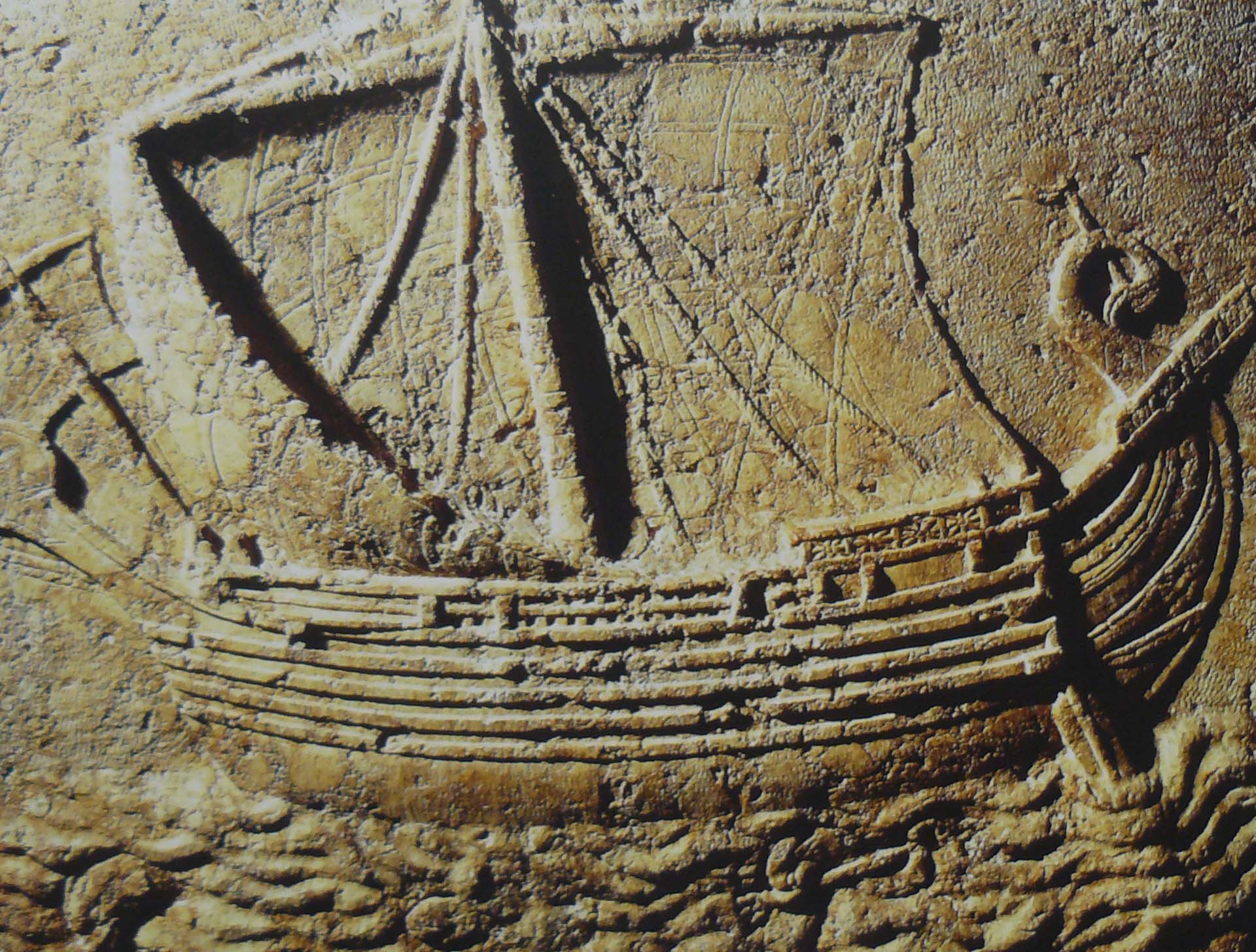
In about the year 600 BC, he is said to have commissioned a group of Phoenicians to sail around Africa. According to Herodotus, they sailed east to west beginning from the Red Sea, south along the eastern coast and then north along the western coast of Africa. (No mention is made of rounding what we call the Cape of Good Hope.) They stopped each fall to plant crops to sustain them on their trip. They spent two years sailing around the continent and in the third year, returned through the Gates of Hercules to the Mediterranean and then made their way back to Egypt.
There is much controversy about this account, with many people doubting that it ever happened. But there is one line in the story by Herodotus that leads us to believe that it may have actually taken place.
In his story, Herodotus writes that as they traveled east to west, “they had the sun on their right” - to the north of them.
When people sail in the Mediterranean, the sun is to the south of them, because they are above the equator. So when they sail east to west, the sun would be to their left.
However, in that time, people thought that the earth was a flat disk, with the Mediterranean in the center and the countries around it, with all of it surrounded by the “river of ocean.” They had no concept of the earth being a sphere, with an equator. So they had no idea that the sun might be in a different position as you go below the equator.
Herodotus appears to have believed the story of the Phoenician expedition around Africa, but he doubted the idea that the sun could have been to their right as they sailed east to west. But this is the greatest evidence that these sailors did circumnavigate Africa over 2,000 years before the first Portuguese expedition by Bartolomeu Dias in 1488 which reached the Cape of Good Hope and entered the Indian Ocean, and the subsequent journey ten years later by Vasco da Gama, who led the first fleet around Africa to India.
Once again a very interesting post! Every time I learn something new about history in your articles. Why weren’t you there when I was at school during my history lessons… I would have had straight A’s all the way! 😉
This is really fascinating. Your articles give us such a different perspective on travel, each time they remind me not to take our modes of transport for granted. Your process of investigation and description is interesting, and I love to hear about how they planted crops to sustain them. A great read!
As a sailor, I can’t think of a better way to spend a few years!! When did King Neptune arrive into all of this, as I didn’t see him mentioned, is he a greek god perhaps? When a boat crosses the atlantic they give gifts to king neptune to request safe passage etc - it is quite a ceremony on a crossing with all the slops from the galley being put over the heads of first timers!
Actually that happens when they cross the equator.
Great post Lee! I think the Egyptian heritage with all the stories of pharaohs, kings and rulers from pre-dynastic times makes this an even more attractive location worth exploring (hence the reason I included this in our Dream Destinations series on our website a few days ago).
I find it so crazy to think about what it must have been like to travel in a boat with no real concept of direction but I can also see this as a good thing and very relaxing (though maybe the Egyptians didn’t feel this way back in those days!)
I find the idea of setting off on a boat without a real idea of where you were going (or where the edge of the flat world was) amazing! I’d like to think that this particular tale is true but I guess we’ll never really know.
If it were true, that would have been one incredible feat back then. Just imagine… attempting something like that all that time ago. Whether they did do the whole trip or not, it certainly sounds like an epic adventure!