I’ll take a little break from the ancient travelers, and talk about something more recent, but still 50 years ago.
Recently I had to work in Port Washington, NY, on Long Island. To get there I drove through Queens, which is one of the boroughs of New York city. A slight deviation from my route brought me to the site of the New York World’s Fairs of 1939 and 1964, in Flushing Meadows Corona Park, Queens, NY.
Why is this important to me? I was one of the 51 million visitors who attended the fair in 1964. I don’t remember much about it, but I know that by now, according to some of the exhibits at the fair, we should all be driving flying cars by now.
Some of the attractions and new technologies presented at the fair included microwave ovens, Disney’s “It’s a Small World” animatronic ride and Belgian waffles with strawberries and whipped cream.
The video phones that were among the technological predictions have morphed into things like Skype and Facetime. IBM and NCR had computers that could give out information based on input from cards – forerunners of Google and Bing. In addition to “It’s a Small World,” there were three other animatronic exhibits, including one with a robotic Abraham Lincoln. And the iconic American muscle car, the Ford Mustang, was introduced to the American public at the 1964 New York World’s Fair.
Before leaving home, I looked at google maps and saw that the Queens Zoo is located adjacent to the World’s Fair site, within walking distance. And from the Queens Zoo website I discovered the parking lot on 111th Street. So I parked in the lot for the zoo, which is free and was almost empty at the day and time that I was there.
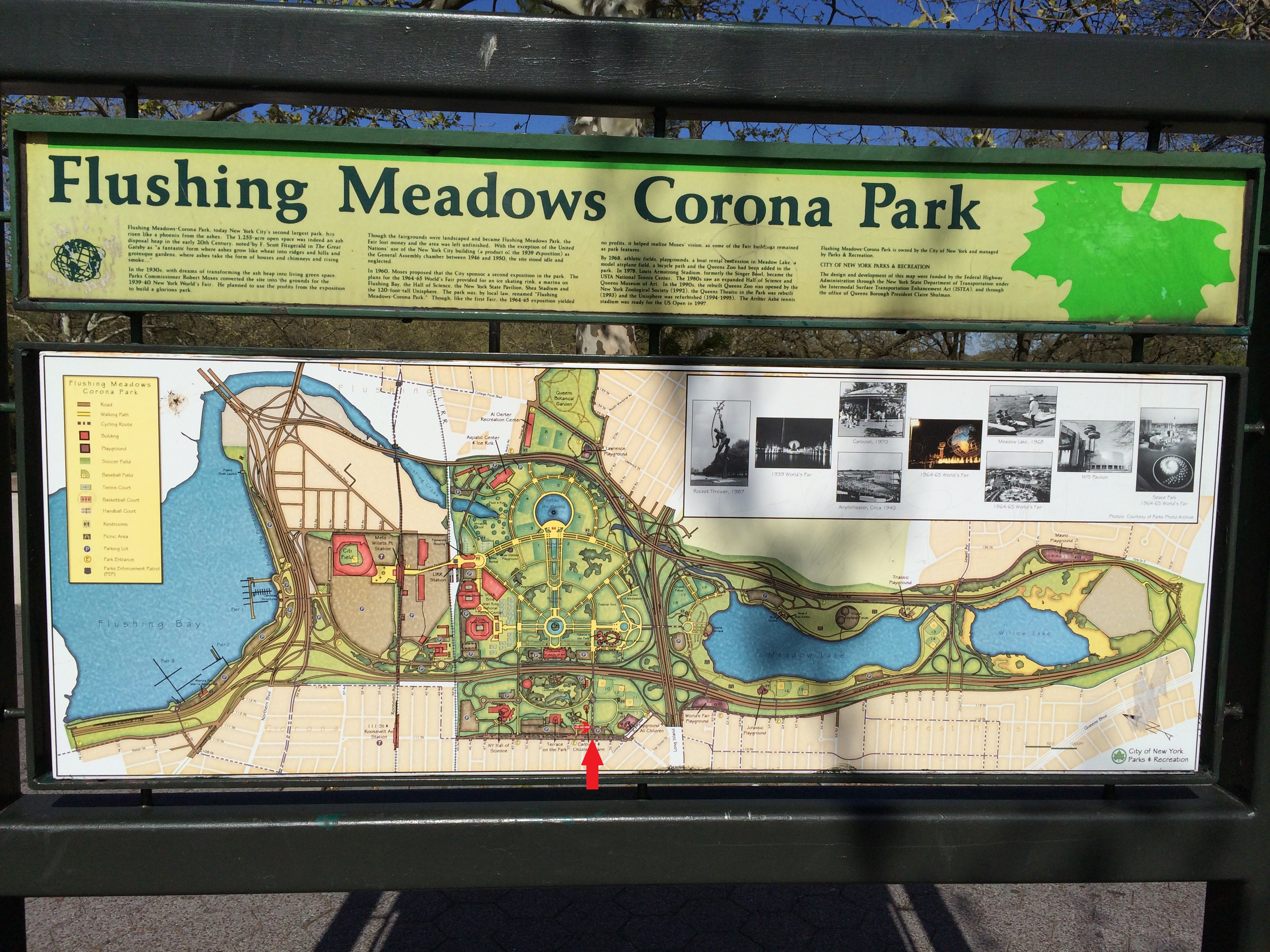
In the parking lot, next to a set of steps leading down to a walkway, is this very convenient sign. I added the big red arrow to the photo. Just above it is a dark horizontal line which is 111th Street, and above that is the parking lot. You can see a small red blob which is the “You Are Here” marker. This map showed me that I could walk down the steps and straight ahead to get to where I wanted to go. Without this sign, I would have taken a more round-about path and would have done much more walking.
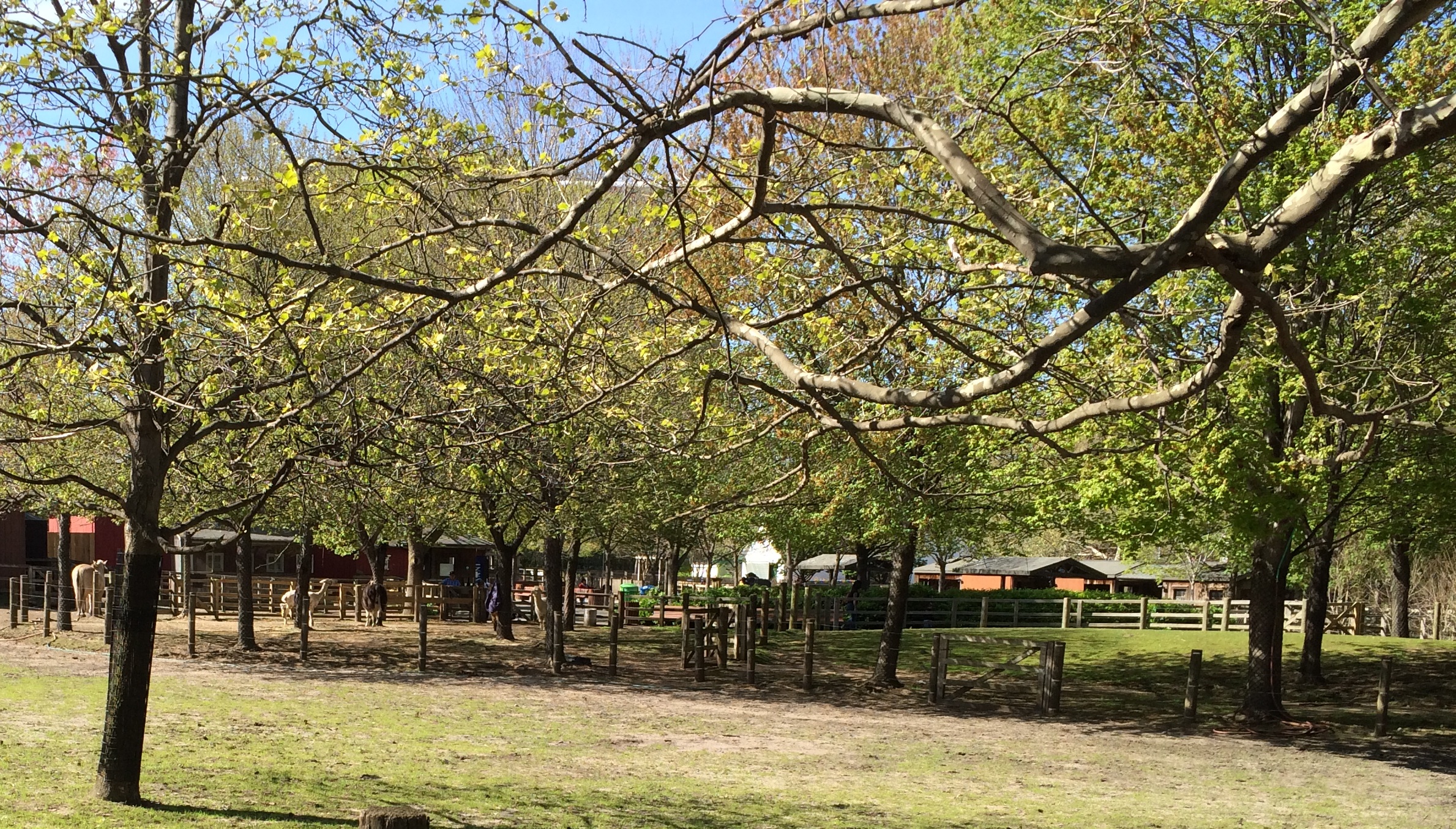
To the left of the path is the Queens Zoo. I didn’t visit it, but I took this photo of a part of the zoo with some cows and llamas.
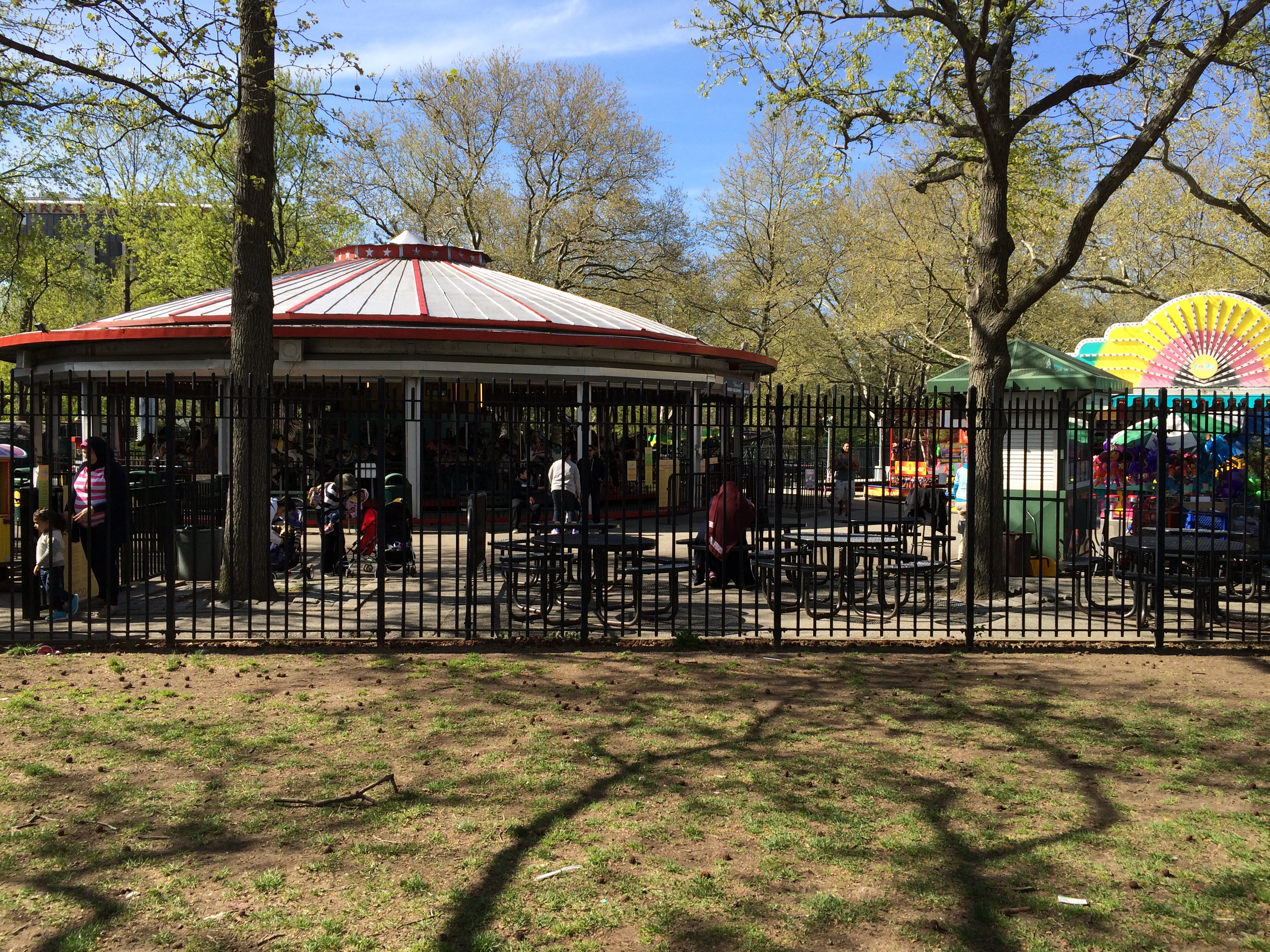
Up the path a ways, I went past the antique carousel, which is open to the public for free.
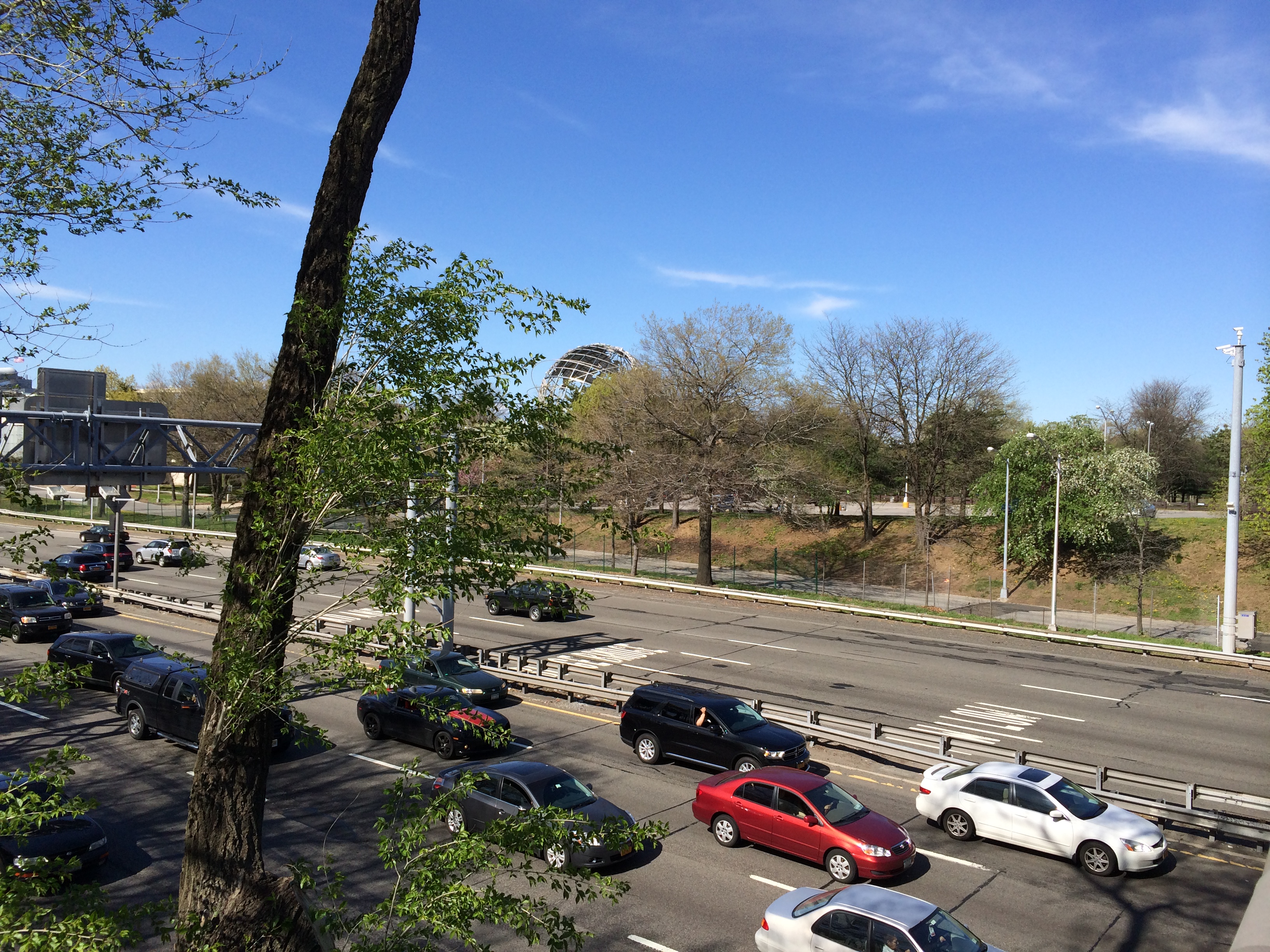
As I continued walking toward the site of the fairgrounds I came to a bridge over the Cross Island Expressway. You can see the Unisphere peeking over the trees.
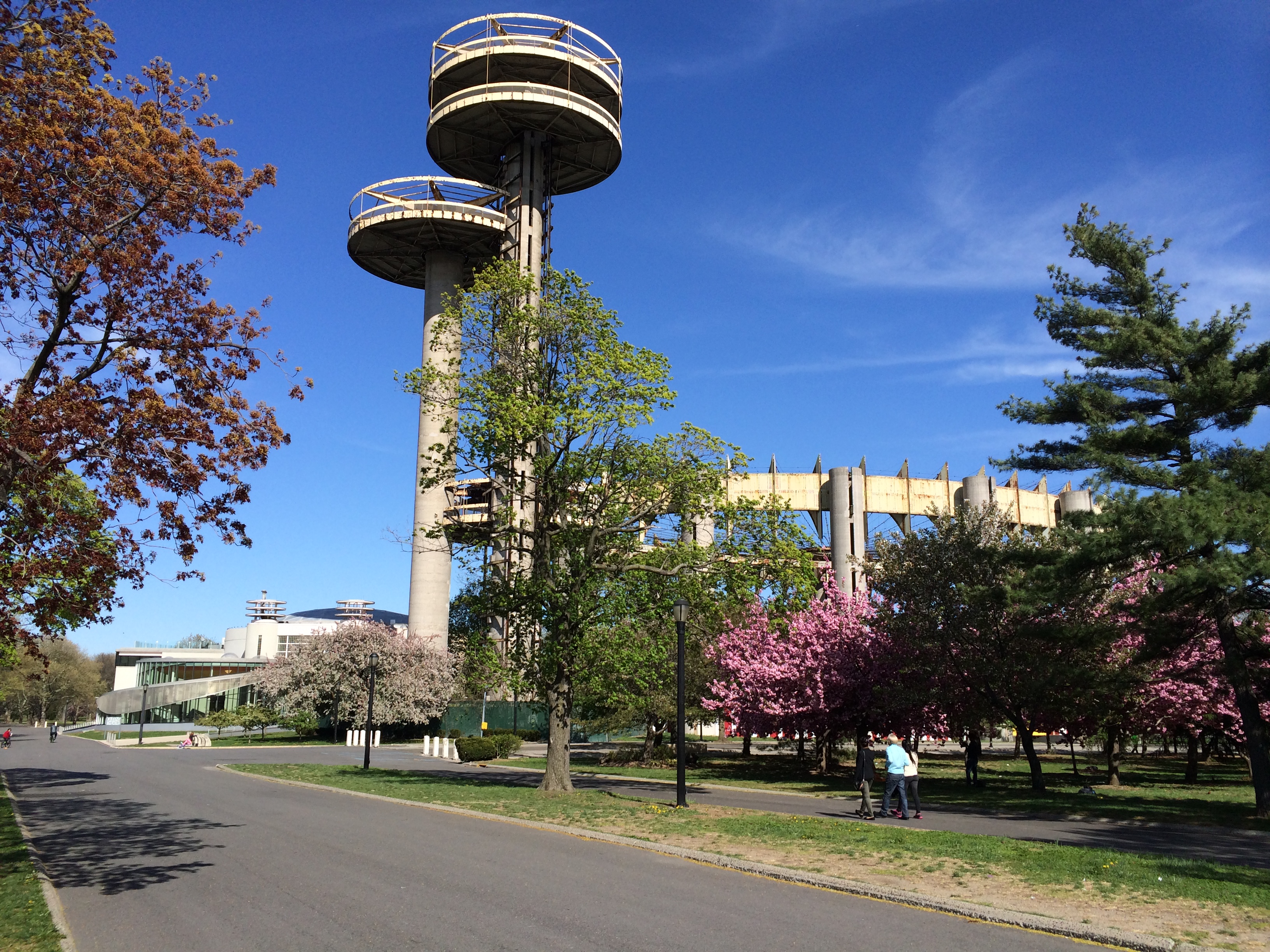
Off to the right is what is left of the New York State pavilion, rusting and locked and waiting for a decision about its future.
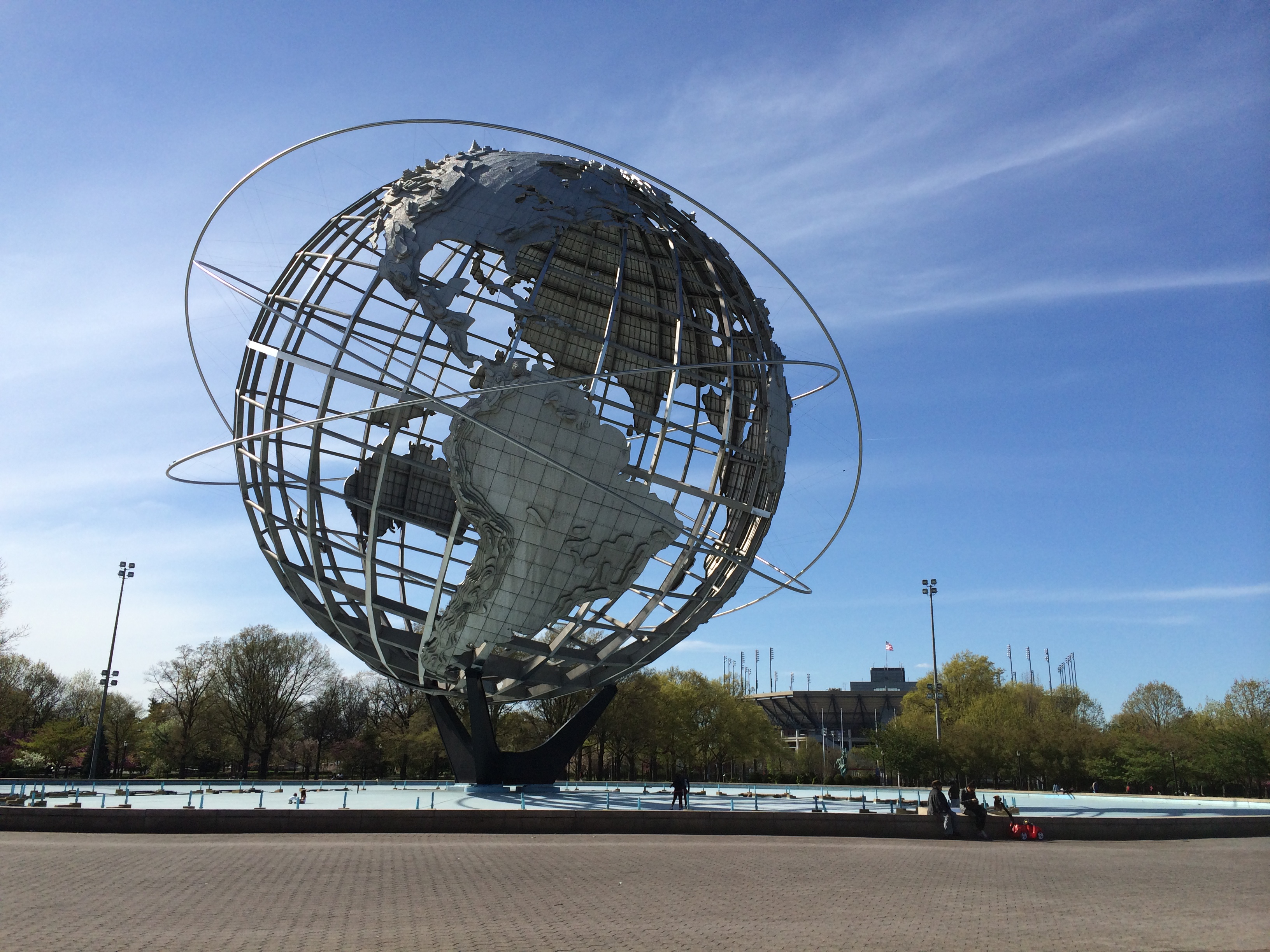
First I walked to the symbol of the fair, the Unisphere, the giant metal globe donated by the US Steel Corporation. According to the plaque on the wall of the fountain around it, this symbol of the 1964 World’s Fair was “Dedicated to man’s aspirations toward Peace through mutual understanding and symbolizing his achievements in an expanding universe.”
The fountain was dry, but there were signs all around warning people to not swim or play in it, so I guess they must have water in it sometimes.
Nearby is the Queens Museum in a building which dates to the 1939 New York World’s Fair. This building briefly housed the United Nations General Assembly after World War II. Inside are posters from both fairs, a replica of Michelangelo’s “Pieta,” which was in the Vatican Pavilion during the 1964 fair, a scale model of the city of New York called the “Panorama of the City of New York,” with models of each of the city’s 895,000 buildings built before 1992, along with every street, park and bridge.
Over on the other side of the zoo, where I didn’t see it, is the New York Hall of Science with two NASA rockets standing 100 feet (30 meters) high. The New York Hall of Science replaced a temporary pavilion and opened a few years after the fair.
The fairgrounds are now a park, and there were people enjoying the sunshine. There were people playing soccer, picnicking or just sitting on benches soaking in the sunshine. It was good to know that the grounds were not just sitting idle and being wasted.
The next photo was taken near the Unisphere, looking out toward the Fountain of the Planets, with several reflection pools along the way.
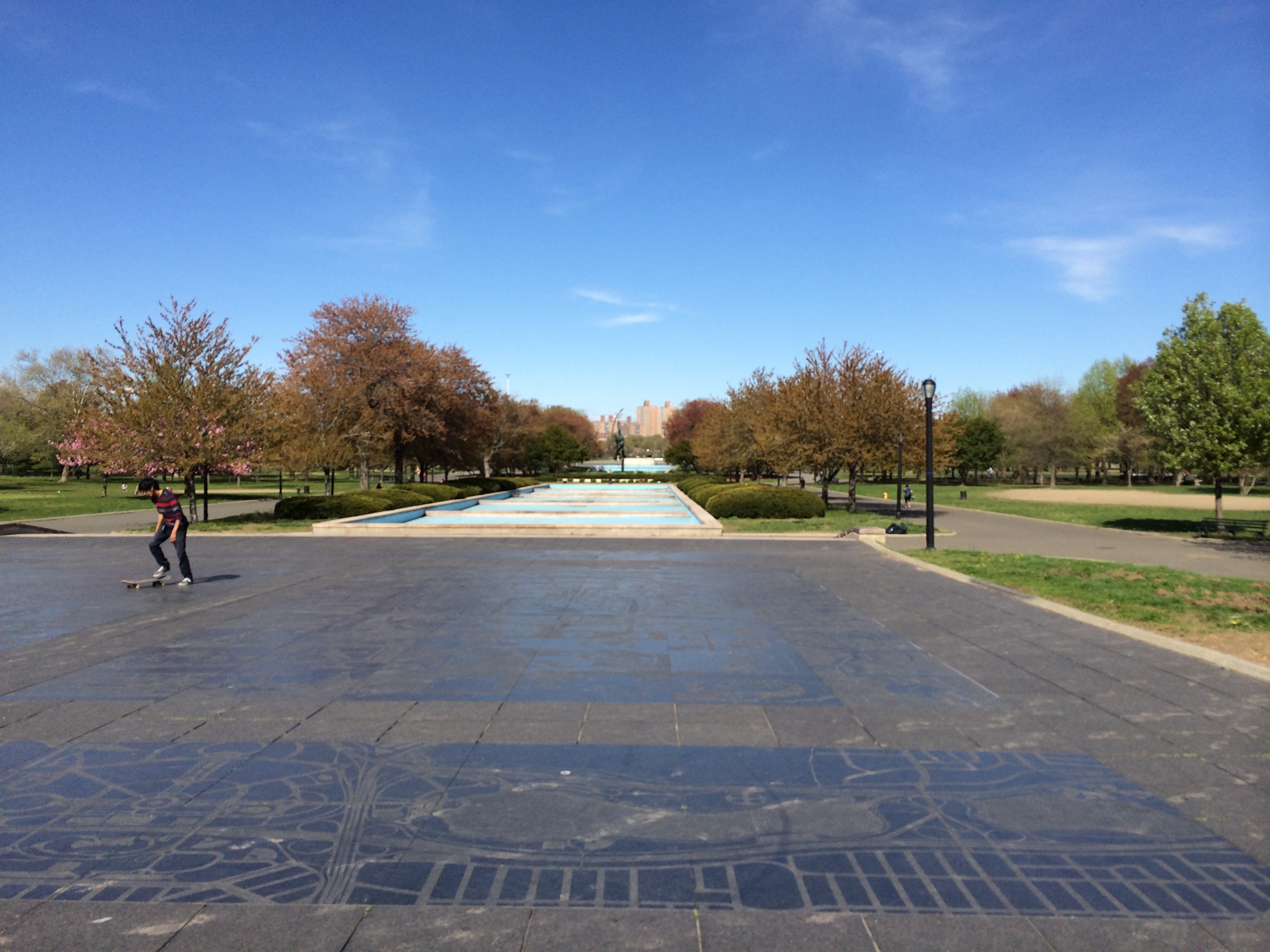
The pavement that this person is trying to skateboard on has maps of the ground inscribed on it.
Partway down in the distance is the sculpture called the “Rocket Thrower,” designed by Donald De Lue. A close-up view is in the next photo.
The reflecting pool at the end, closest to the Fountain of the Planets, had some water in it, probably from recent rains. There were some kids playing in it but I’m not sure how sanitary it was…
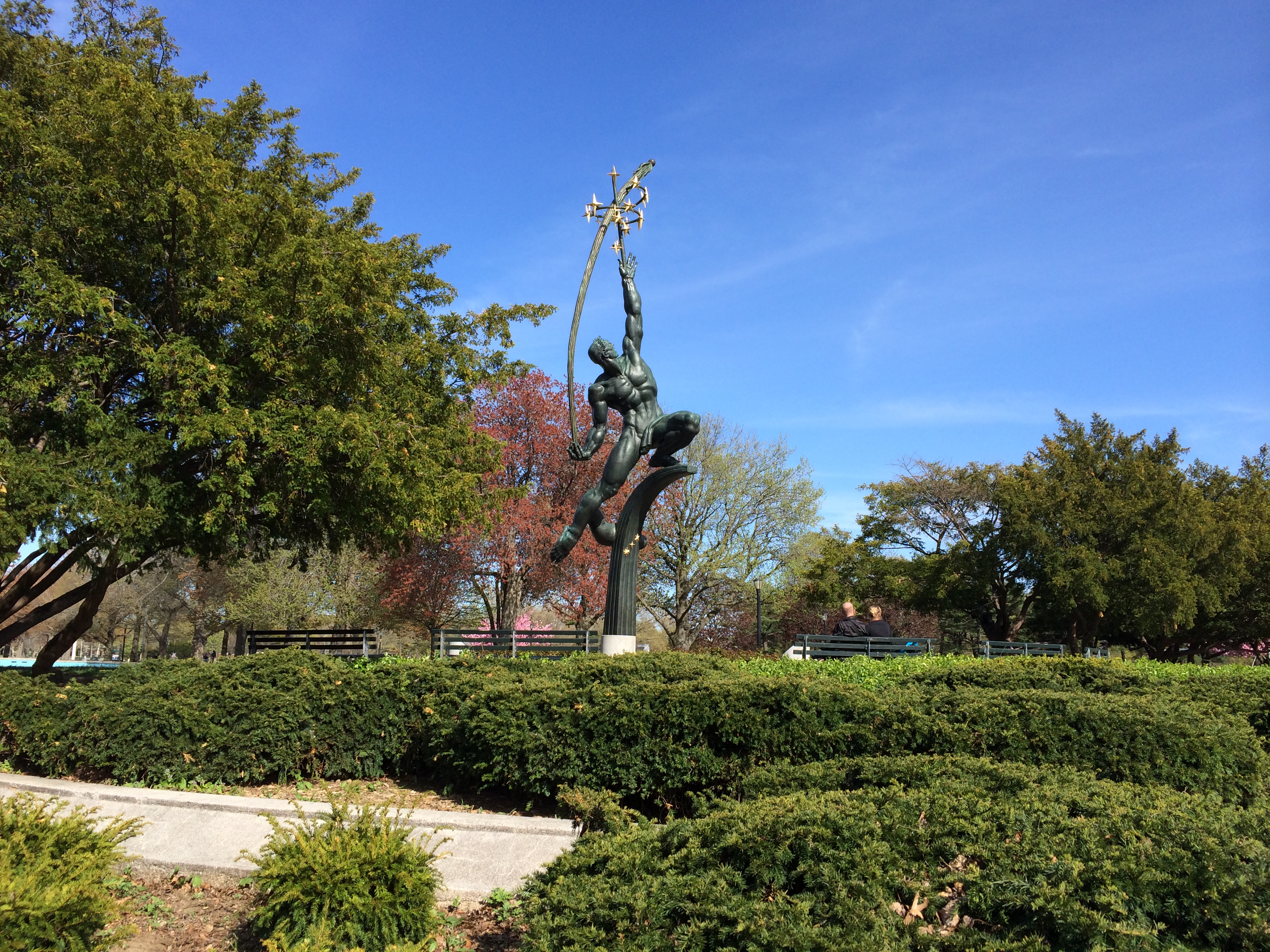
This is the sculpture called the Rocket Thrower. He is a heroic, 43-foot high bronze figure throwing a rocket with his right hand and reaching for the stars with his left. De Lue was an American sculptor, born in Boston, MA, apprenticed under the English sculptor Brian Baker, and later studied art in England and France. He created the plaster model which was shipped to Italy and was cast at the Fonda Artista in Via Reggio, which took almost a year.
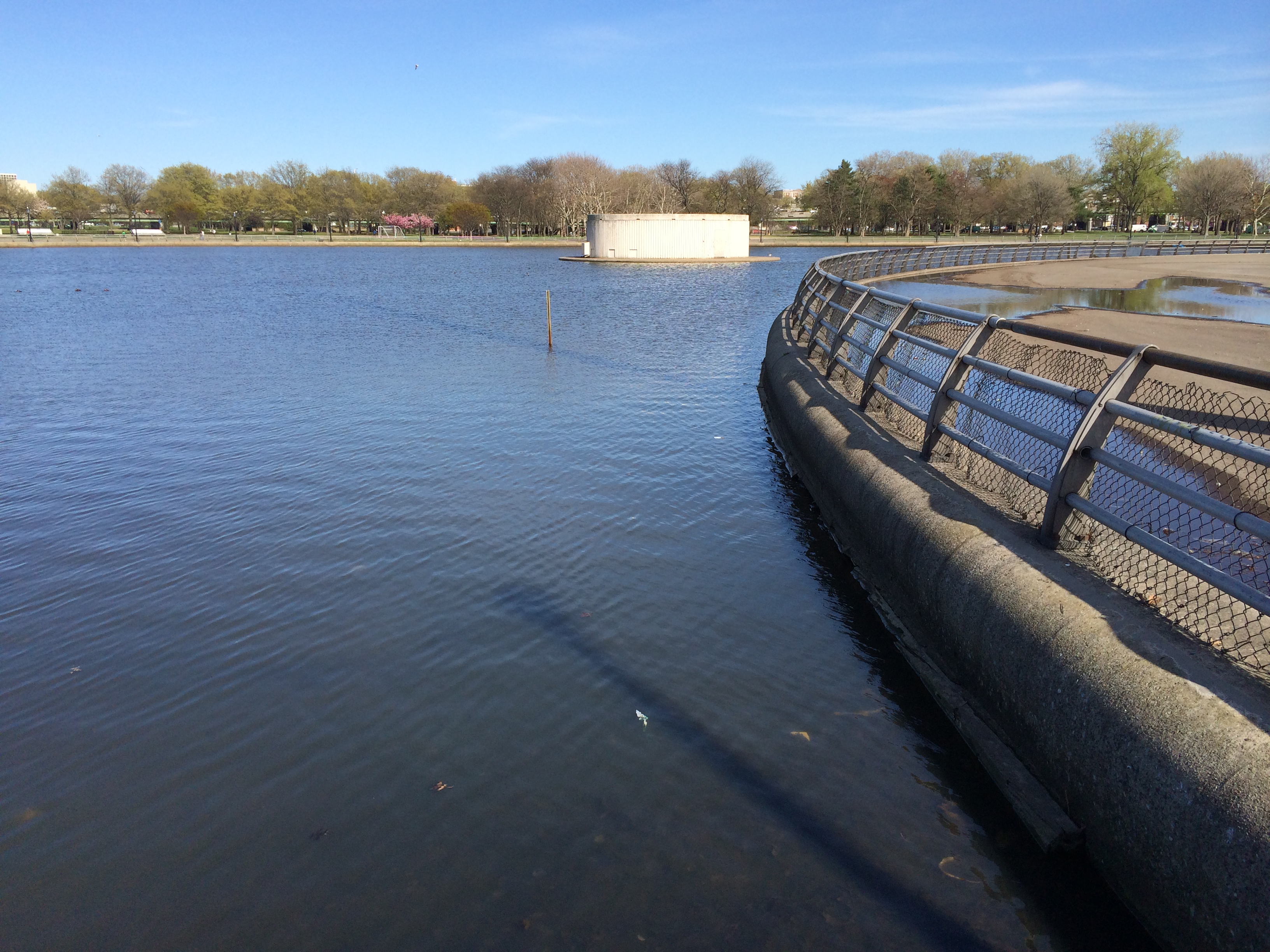
The photo above shows the Fountain of the Planets, from the left side. I don’t know what it looks like when the fountain is turned on.
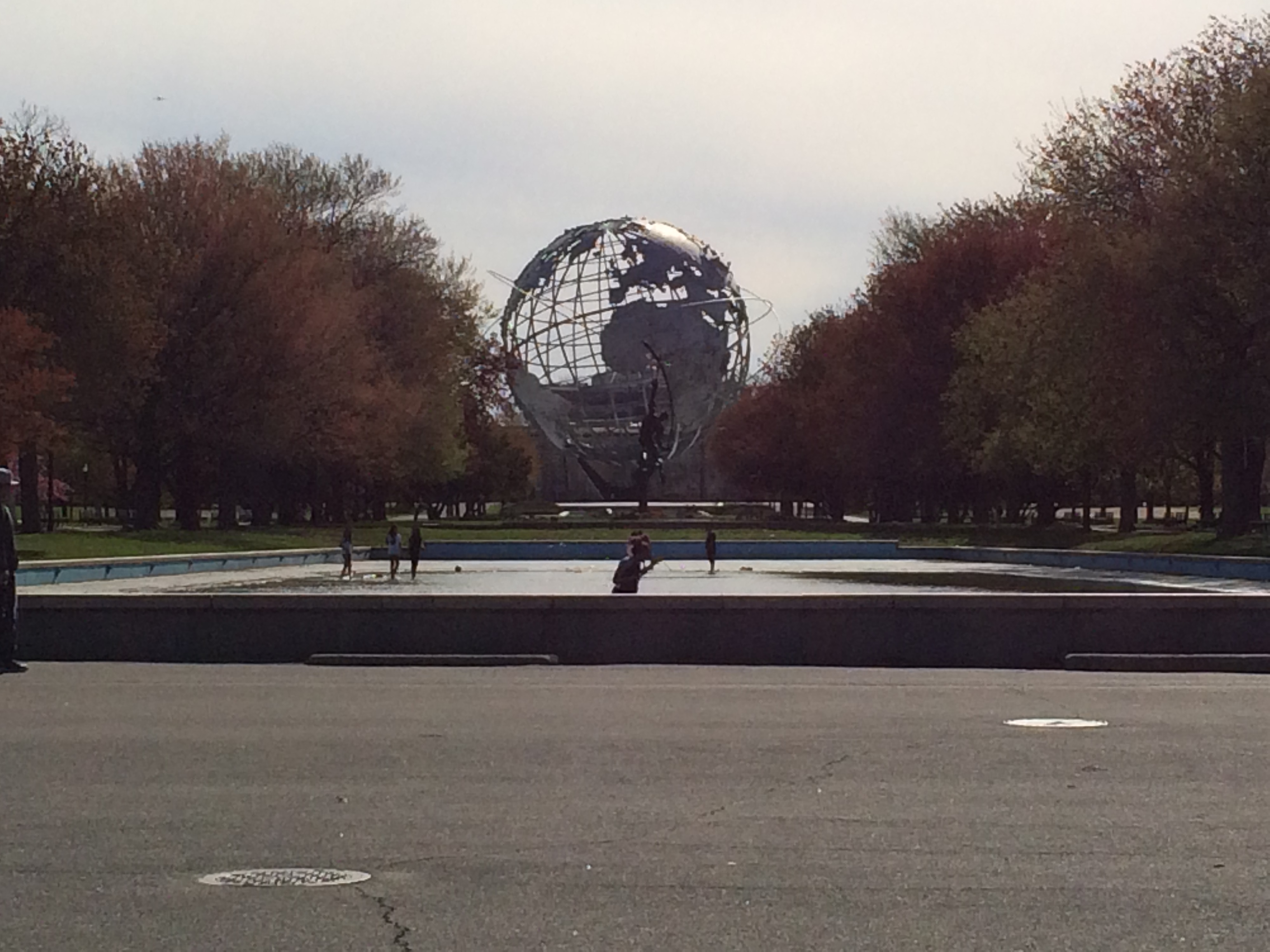
Here is a view looking back from the Fountain of the Planets to the Unisphere, with the Rocket Thrower in between.
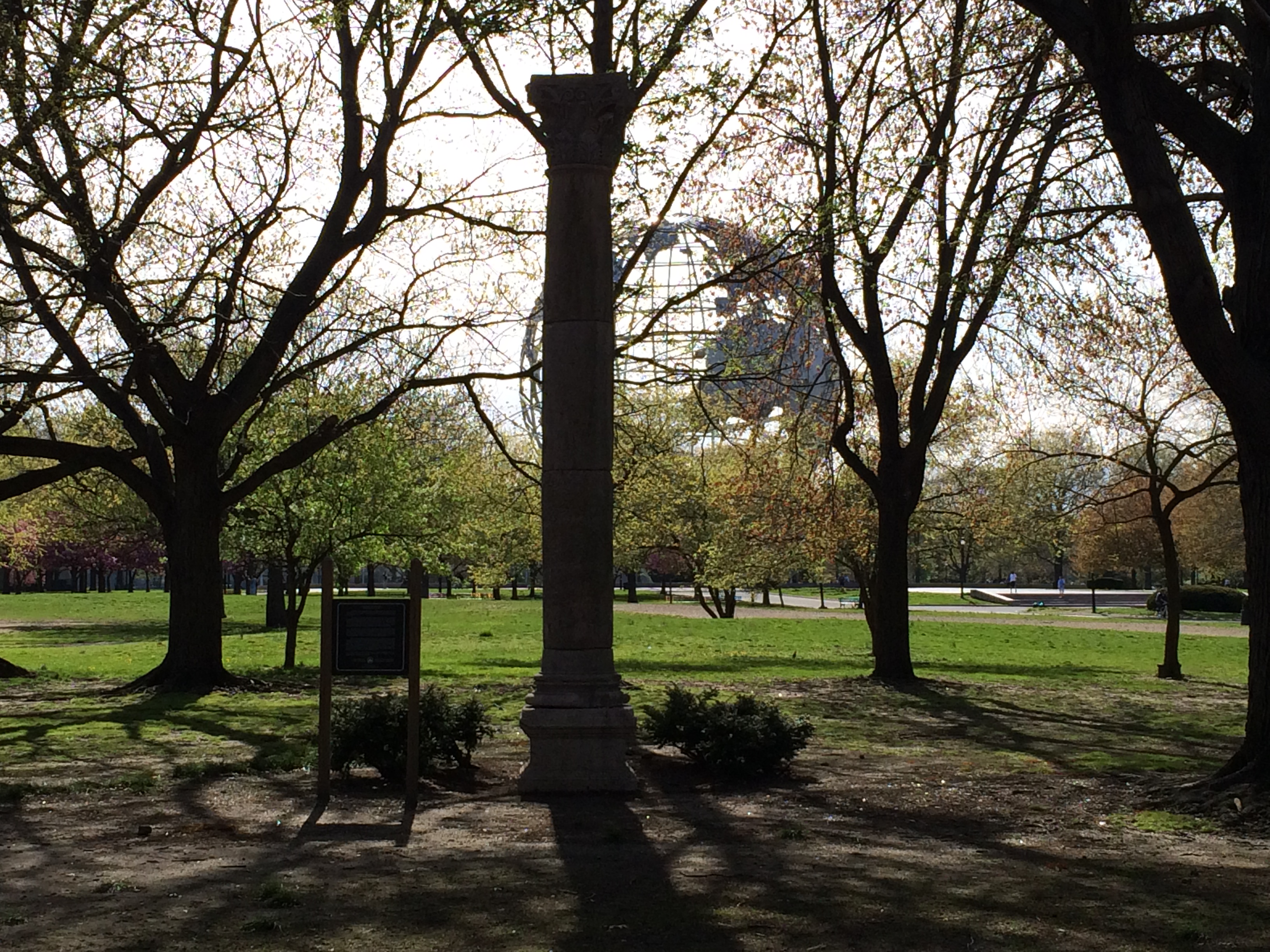
As I walked back to the car, I came across the 30 foot high marble Column of Jerash, which was presented to the New York World’s Fair Corporation and the City of New York by His Majesty King Hussein of the Hashemite Kingdom of Jordan. It was one of many columns in the Temple of Artemis erected by the Romans in 120 AD in the Roman city of Jerash, Jordan.
The Jordanian pavilion was located near this site, and inside, among other things, was one of the Dead Sea Scrolls, displayed in a replica of the cave in which it was discovered.
This column is one of the few true antiquities displayed in New York City’s parks.
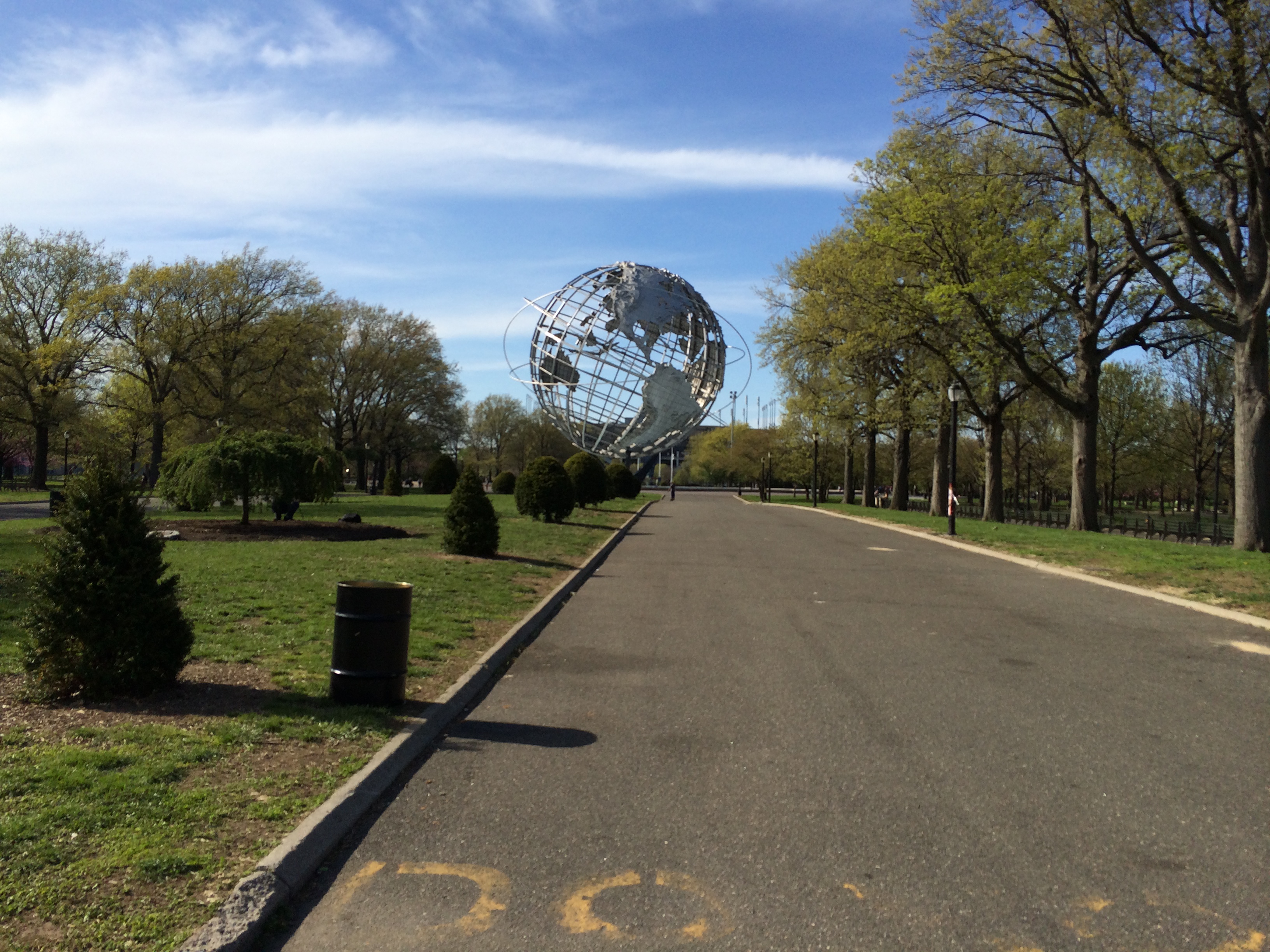
One last view of the Unisphere as I walked to the car.